
- Delhi
- Last Update 10:05: am
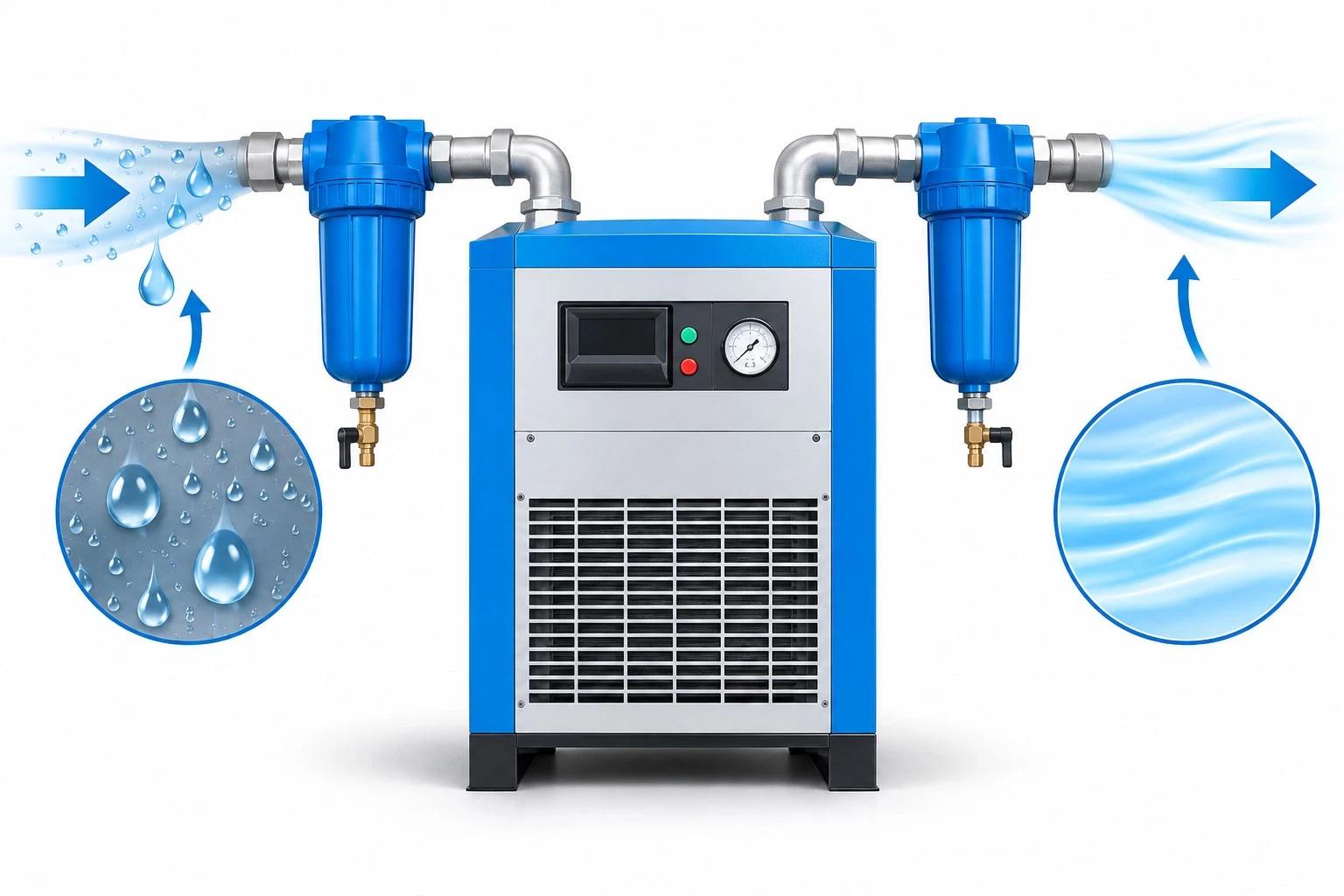
What Is a Compressed Air Dryer? Working, Types, and Benefits
Compressed air is widely used in manufacturing plants, workshops, pharmaceutical facilities, and other industries. However, compressed air often contains moisture that can damage equipment, affect product quality, and reduce system efficiency. A Compressed Air Dryer helps remove this moisture and provides dry, reliable air for industrial applications.
Choosing the right dryer can improve equipment performance, reduce maintenance needs, and support smooth production. In this guide, we explain how a compressed air dryer works, its types, benefits, and how to select the right system.
Quick Answer: What Is a Compressed Air Dryer?
A compressed air dryer is an industrial device that removes moisture from compressed air before it enters the air distribution system. It helps prevent corrosion, protect pneumatic tools, reduce moisture-related production problems, and improve the reliability of compressed air equipment.
The right dryer depends on the required air quality, operating pressure, airflow, temperature, and application.
Why Is a Compressed Air Dryer Important?
When atmospheric air enters a compressor, it carries water vapour. During compression, the air becomes hot, and some moisture can condense into liquid water as the air cools.
If this moisture remains in the compressed air system, it can cause several problems:
-
Equipment damage: Moisture can cause corrosion in pipes, tanks, and air tools.
-
Poor product quality: Water contamination may affect painting, packaging, and manufacturing processes.
-
Higher maintenance costs: Moisture can increase wear and lead to more frequent repairs.
-
Production interruptions: Water in pneumatic equipment can affect performance and reliability.
-
Reduced system efficiency: Moisture-related problems can increase operating and maintenance expenses.
A suitable compressed air dryer helps control these risks and keeps the compressed air system working reliably.
How Does a Compressed Air Dryer Work?
A compressed air dryer removes water vapour or moisture from compressed air using a specific drying method.
The basic process includes the following steps:
-
Air compression: The compressor draws in atmospheric air and compresses it.
-
Cooling: The compressed air cools, causing some water vapour to condense.
-
Moisture separation: Water droplets are separated and drained from the system.
-
Air drying: The compressed air passes through a dryer that removes additional moisture.
-
Air distribution: The treated air moves through the pipeline to the connected equipment.
The exact process depends on the dryer type. Some systems cool the air to condense moisture, while others use desiccant materials to absorb water vapour.
Types of Compressed Air Dryers
Different industries need different levels of compressed air dryness. The following are common types of compressed air dryers.
1. Refrigerated Air Dryer
A refrigerated air dryer cools compressed air to condense moisture. The condensed water is then removed through a drainage system.
Key benefits:
-
Suitable for many general industrial applications.
-
Provides consistent moisture removal under suitable operating conditions.
-
Commonly used in workshops and manufacturing facilities.
-
Often a practical choice for general-purpose compressed air systems.
Refrigerated dryers are suitable when the application does not require an extremely low pressure dew point.
2. Desiccant Air Dryer
A desiccant air dryer uses moisture-absorbing materials to remove water vapour from compressed air. These materials are commonly called desiccants.
Key benefits:
-
Can achieve lower pressure dew points than standard refrigerated dryers.
-
Suitable for applications requiring very dry air.
-
Useful in industries with strict moisture-control requirements.
Desiccant dryers may be suitable for pharmaceutical production, sensitive instruments, and processes where moisture must be carefully controlled. The required air quality should always be confirmed for the specific application.
3. Membrane Air Dryer
A membrane air dryer uses specialised membranes to separate water vapour from compressed air.
Key benefits:
-
Compact design.
-
Few moving parts.
-
Can be useful for point-of-use drying.
-
Suitable for certain applications with specific airflow requirements.
The best option depends on airflow demand, required dryness, operating conditions, and maintenance requirements.
How to Choose the Right Compressed Air Dryer
Selecting the right dryer is important for reliable performance and operating cost control. Consider these factors before purchasing a system.
1. Airflow Capacity
Check the compressed air demand of your plant. The dryer must handle the required airflow under actual operating conditions.
2. Required Pressure Dew Point
Pressure dew point indicates the temperature at which moisture begins to condense from compressed air at a given pressure. Applications requiring very dry air may need a desiccant dryer rather than a standard refrigerated model.
3. Operating Pressure and Temperature
Inlet air temperature, ambient temperature, and operating pressure can affect dryer performance. Confirm that the selected model is suitable for your plant conditions.
4. Industry Requirements
Different industries have different air-quality needs. General manufacturing, automotive workshops, pharmaceutical facilities, and food-processing operations may require different moisture-control solutions.
5. Energy Consumption
Compare the energy requirements and operating costs of available models. Consider the complete system, including pressure losses and any purge-air requirements.
6. Maintenance and Service
Check filter replacement schedules, drain operation, cleaning requirements, and access to technical support. Proper maintenance helps maintain drying performance.
What Is the Role of a Reciprocating Air Compressor?
A Reciprocating Air Compressor uses a piston moving inside a cylinder to compress air. It is commonly used in workshops, service facilities, and applications that need compressed air at specific pressure levels.
Like other compressors, a reciprocating model can introduce moisture into the compressed air system because atmospheric air contains water vapour.
A suitable air-treatment arrangement may include an aftercooler, moisture separator, filters, receiver tank, and compressed air dryer. The exact configuration depends on the compressor, operating conditions, and required air quality.
Using the correct combination of equipment helps protect pneumatic tools and downstream machinery from moisture-related problems.
Why Is Regular Air Compressor Service Important?
Regular Air Compressor Service helps maintain system performance and identify problems before they cause major interruptions.
A proper maintenance routine may include:
-
Inspecting air filters and replacing them when required.
-
Checking oil levels and lubrication requirements where applicable.
-
Inspecting belts, connections, and other components.
-
Checking for air leaks.
-
Inspecting the moisture separator and automatic drain.
-
Checking the compressed air dryer and its drainage system.
-
Monitoring operating pressure, temperature, and unusual noise.
-
Following the manufacturer's maintenance schedule.
A poorly maintained compressor or dryer may not deliver the required air quality. Regular inspection helps improve reliability, reduce unexpected downtime, and support efficient operation.
How to Choose Air Compressor Manufacturers in Delhi NCR
When comparing Air Compressor Manufacturers in Delhi NCR, consider more than the purchase price. A reliable supplier should understand your application and help you choose equipment that matches your actual air demand.
Before making a decision, check:
-
Product specifications and available capacities.
-
Suitability for your operating pressure.
-
Compatibility with the required air dryer.
-
Installation and commissioning support.
-
Spare parts availability.
-
Maintenance and repair services.
-
Technical assistance after installation.
It is also useful to evaluate the complete compressed air system rather than selecting the compressor and dryer separately without checking compatibility.
Common Mistakes to Avoid When Selecting an Air Dryer
Avoid these common mistakes when planning a compressed air system:
-
Choosing a dryer without calculating the required airflow.
-
Ignoring the pressure dew point required by the application.
-
Overlooking inlet air temperature and ambient conditions.
-
Selecting equipment based only on its initial price.
-
Neglecting filters and condensate drainage.
-
Skipping scheduled maintenance.
-
Failing to check compatibility between the compressor and dryer.
Correct sizing and regular maintenance can help prevent unnecessary costs and improve system reliability.
Frequently Asked Questions
1. What is the main purpose of a compressed air dryer?
The main purpose of a compressed air dryer is to remove moisture from compressed air. It helps prevent corrosion, protects equipment, and supports consistent performance in industrial applications.
2. Which type of compressed air dryer is best for industrial use?
The best type depends on the required pressure dew point, airflow, operating conditions, and application. Refrigerated dryers are common for general industrial use, while desiccant dryers are suitable when a lower pressure dew point is required.
3. Does a reciprocating air compressor need an air dryer?
It depends on the application and required air quality. Where moisture can damage equipment or affect production, an appropriately sized dryer and suitable moisture-separation equipment can help protect the compressed air system.
4. How often should a compressed air dryer be serviced?
Service frequency depends on the dryer type, operating hours, environment, and manufacturer's instructions. Regularly inspect filters, drains, and operating performance, and follow the recommended maintenance schedule.
5. Why should I choose a reliable compressed air equipment supplier?
A reliable supplier can help assess your airflow requirements, pressure dew point, installation conditions, and maintenance needs. This supports better equipment selection and long-term system reliability.
Conclusion
A Compressed Air Dryer is an important part of a reliable compressed air system. It removes unwanted moisture, helps protect equipment, and supports consistent industrial operations. Choosing the right dryer requires careful consideration of airflow, pressure dew point, operating conditions, and application requirements.
Air Care Equipment provides industrial compressed air equipment solutions. When planning a new installation or upgrading an existing system, evaluate the compressor, dryer, filtration, drainage, and maintenance requirements together to achieve reliable performance.
Popular Post

- Saturday 30, 2022
Advantages of using electric scooters in India

- Monday 08, 2022
Why Cheetos are Popular in Snacks?

- Saturday 20, 2022
Why Do You Need a Financial Advisor?

- Saturday 17, 2022
Reasons Why Doritos Taste So Damn Good

- Thursday 06, 2022
5 Famous Temples in Gurugram

- Wednesday 18, 2023
What are the health benefits of Cheetos?

- Saturday 06, 2023
7 Things to Consider Before You Hire Packers and Movers in Noida


Tags